The Main Squawk: American is opting to renovate its Boeing 777-200ERs
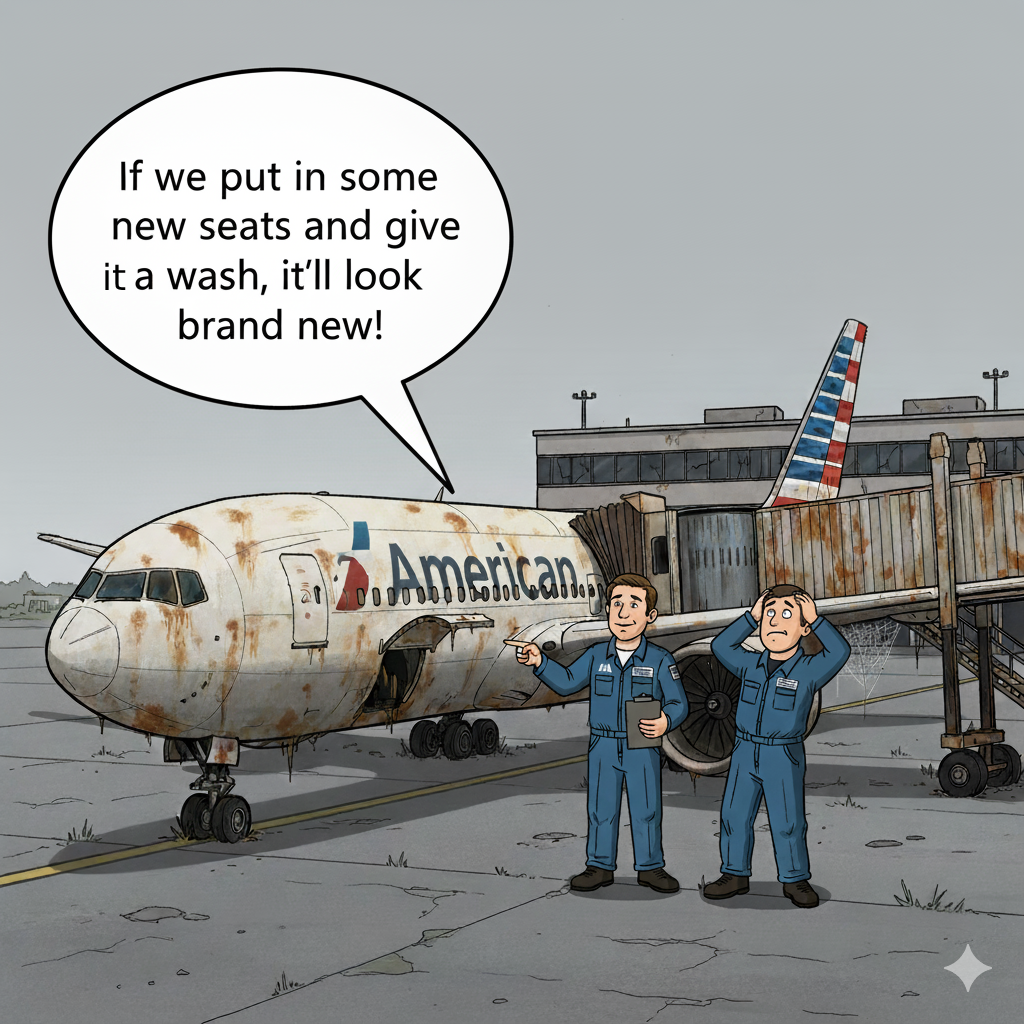
After months of confusion surrounding the fate of its Boeing 777 fleet, American finally has a plan for the aging widebody aircraft. Starting in late-2026, American’s forty-seven large fleet of 777-200ER aircraft will receive a total cabin retrofit, positioning them to remain in service well into the next decade. The overhaul, which is planned to last several years, will see the installation of American’s Flagship Suite business class and the return of TVs in every seat (which never should have been removed in the first place).
For an airline that needs a Premium facelift, this long-awaited retrofit is important. When it’s finally complete, American’s leadership says it will result in a roughly 25% increase in premium cabin capacity across the its 777-200ER fleet. And fortunately, the airline isn’t just retrofitting seats. It also plans to replace the aircraft’s existing, sluggish Panasonic Wi-Fi system with the much faster Viasat Wi-Fi service. Thank goodness.
Interestingly, American is prioritizing this massive, years-long retrofit on one of its oldest widebody aircraft ahead of announcing similar plans for its much newer Boeing 787-8 and 787-9 Dreamliners. It’s almost like American’s planning department enjoys making life as complicated as possible for their fleet planners. But hey, at least they’ll have a few years to cancel flights, wreck plans, and figure it all out.
Southwest is launching a new strategy to harness lost income in situations where travel demand winds up being greater than it originally forecast. Here’s how it works:
- Southwest sells a few tickets on a flight from Chicago-MDW to Albuquerque forty days out for $200
- A few weeks later, demand on the route spikes and Southwest realizes: “Oh sh*t. We could have charged a lot more for those flights to Albuquerque!”
- Southwest sends an email to the passengers who already bought tickets that says: “Hey, how about a $30 travel credit to change your flight? We’ll waive all the fees!”
- One of the schmucks who already bought a ticket says: “Sounds like a great deal! I’ll wake up four hours earlier for a free thirty bucks!” Only to realize it’s just that: a lousy thirty bucks.
- Southwest turns around and sells that ticket for $300 and nets an additional $70 profit
This story originally came to light because of a reader over at The Cranky Flier who sent in a question to Brett Snyder (owner and blogger of the site) when they first got one of these emails. Everyone originally assumed it was because Southwest was overselling its seats again, but *sigh of relief* it isn’t. It’s just being reactive. In fact, it’s being so reactive that it’s calling this part of the sales journey “post-booking revenue management.” Which is really just a missed opportunity for an airline who’s main fare is dubbed “Wanna Get Away?” (Seriously though, they couldn’t call it something like: “Wanna Stay Longer? and let us charge someone else more for your seatTM“)
Like Brett and his reader, I can’t help but think that these twenty or thirty dollar incentives are comically underwhelming. $30 is hardly enough to cover an Uber or Lyft to the airport. But what really stings is that for customers who accept the minuscule travel credit, they forfeit all paid-for upgrades, like Southwest’s EarlyBird special or upgraded boarding positions. So, is it really worth it? 🤷
JetBlue and United officially launched their “Blue Sky” partnership last week, granting members of each airline’s frequent flier program the ability to earn and redeem points on each other’s flights. Finally, JetBlue loyalists can redeem their points for something other than a highly competitive flight to Florida. (But good luck redeeming them for seats in Polaris, which are as scarce as available gates during rush hour at Newark.)
For JetBlue, the partnership increases the value of its points by providing its customers with an additional way to spend them. They’re no longer limited to using them within the JetBlue route network. Need to fly from New York to Faro? from Los Angeles to Tokyo? Need a few more options to fly from Boston to Houston? Cue United. It’s a clever way for the struggling low-cost carrier to raise cash at a time when it needs to pay for its incoming Airbus A321s.
Meanwhile, United, which famously abandoned New York-JFK in 2015, is using the partnership to establish a presence on the other side of the river. By partnering with JetBlue—New York’s hometown airline—United can effectively sell tickets and build loyalty with customers who reside on Long Island, or who more likely are just fed up with Newark. This deal, which will eventually include codesharing and reciprocal elite perks, allows United to project power into Delta’s turf using JetBlue’s metal as a trojan horse.
Alaska suffered a “significant IT outage” last week after a failure occurred at their primary data center, prompting a nationwide ground stop that effectively turned the airline into a very expensive, stationary bus company. The crisis, which began late Thursday afternoon, spiraled into two days of chaos, with the airline canceling over 400 flights, utterly destroying the plans of nearly 50,000 “valued guests”—a term that anyone stuck sleeping on an airport floor surely appreciates.
In a move that sounds painfully familiar to any frequent flyer, Alaska admitted that this system failure was a repeat performance, occurring despite having taken “action to harden our systems” following a similar disruption earlier this year. But rest assured: the airline is now bringing in outside technical experts to run an in-depth analysis of the issues.
Air Canada is doubling the size of its operation at Toronto City.
American is pulling Ozempic from flight attendant healthcare coverage for employees without Type II Diabetes.
Alaska is increasing service between Seattle and Seoul starting late-March 2026. The route will be served by Hawaiian’s its Boeing 787-9 Dreamliners.
Delta is rolling out a new culinary collection. (Relax. The Biscoffs will still be there.)
GOL is spreading its wings beyond the Boeing 737 with plans to lease five Airbus A330-900neos in 2026, putting service to Europe in play.
The Indian government wants other countries to stop poaching its pilots.
Swiss is increasing service between Zurich and Montreal in March 2026. The route will be served by its Airbus A350-900 aircraft.
United and JetBlue roll out their plan to earn and redeem points on both carriers.
Leave a Reply